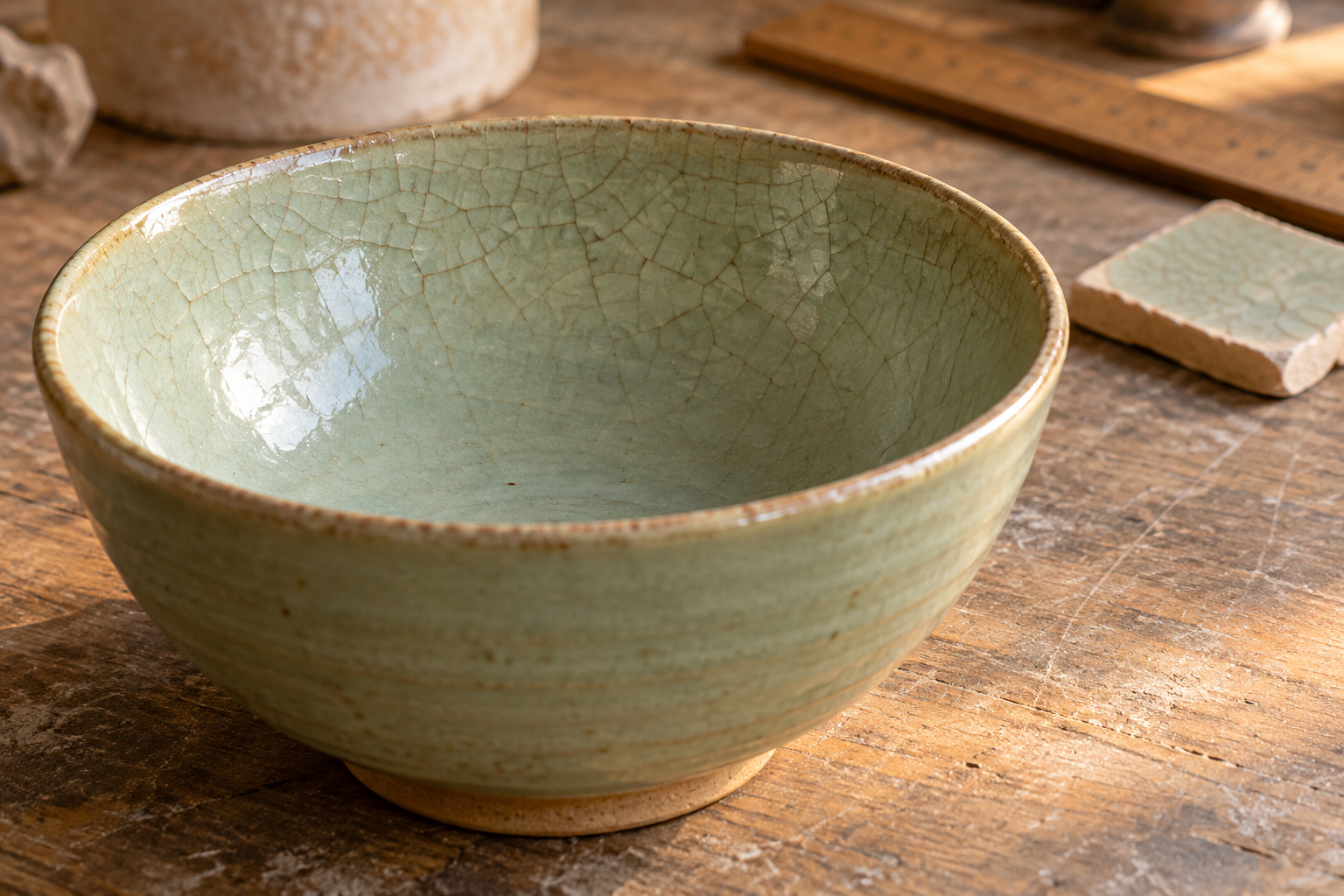
Why a glaze crazes after the pot has cooled
A fine crackle can appear days after firing because glaze and clay carry different strains. Cooling sets the initial fit; later moisture expansion can push a vulnerable surface into crazing.
A little inspiration. A new way of seeing.
Discover thoughtful stories from people
with something to say.
For the endlessly curious.
Read widely, at your own pace.
4 stories found Clear filters ↗
A fine crackle can appear days after firing because glaze and clay carry different strains. Cooling sets the initial fit; later moisture expansion can push a vulnerable surface into crazing.
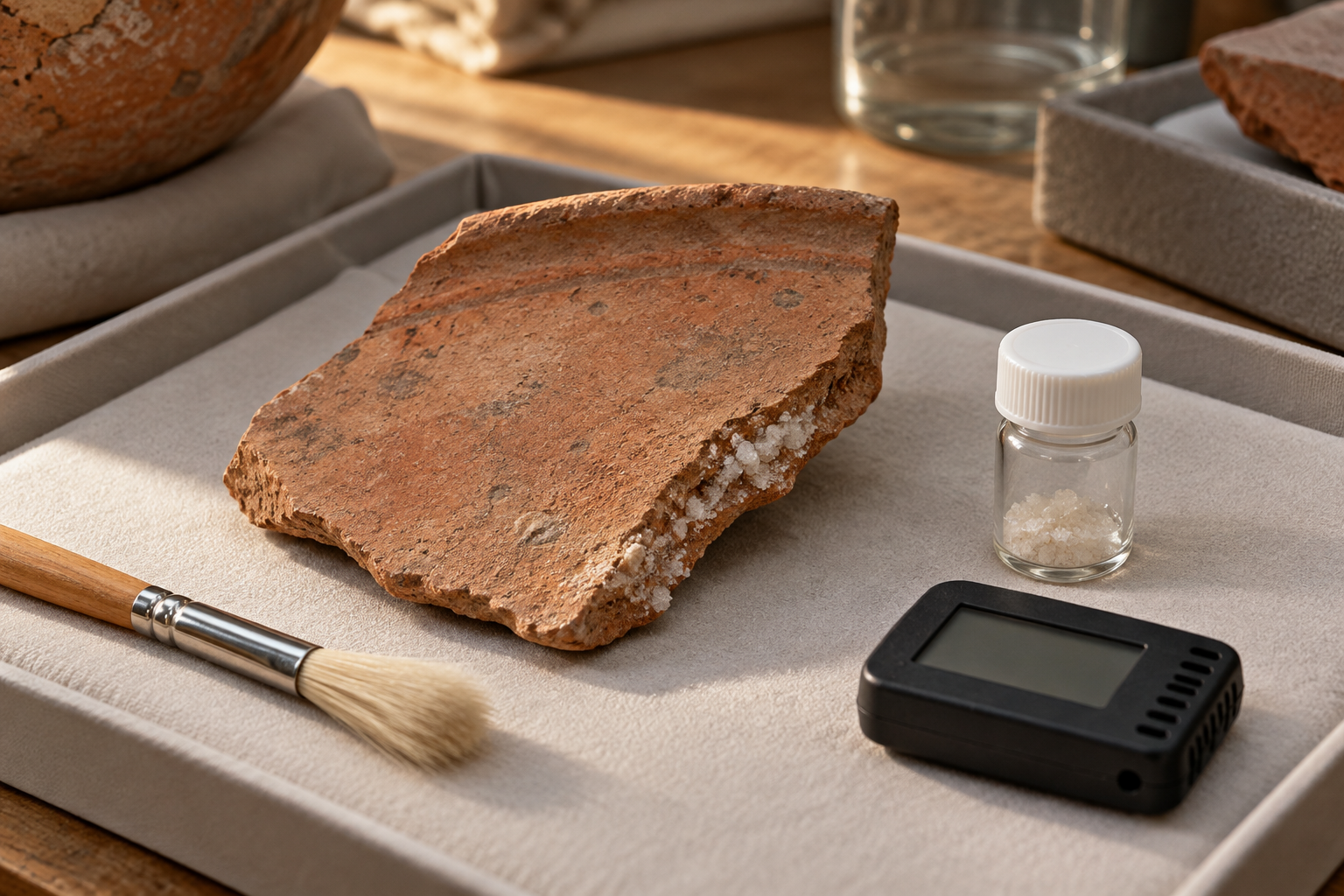
A ceramic vessel can look sound when it leaves wet soil and shed flakes years later. The damaging salt may be inside its pores; removing it takes more than rinsing, and the safest treatment depends on the clay, surface and evidence the object carries.
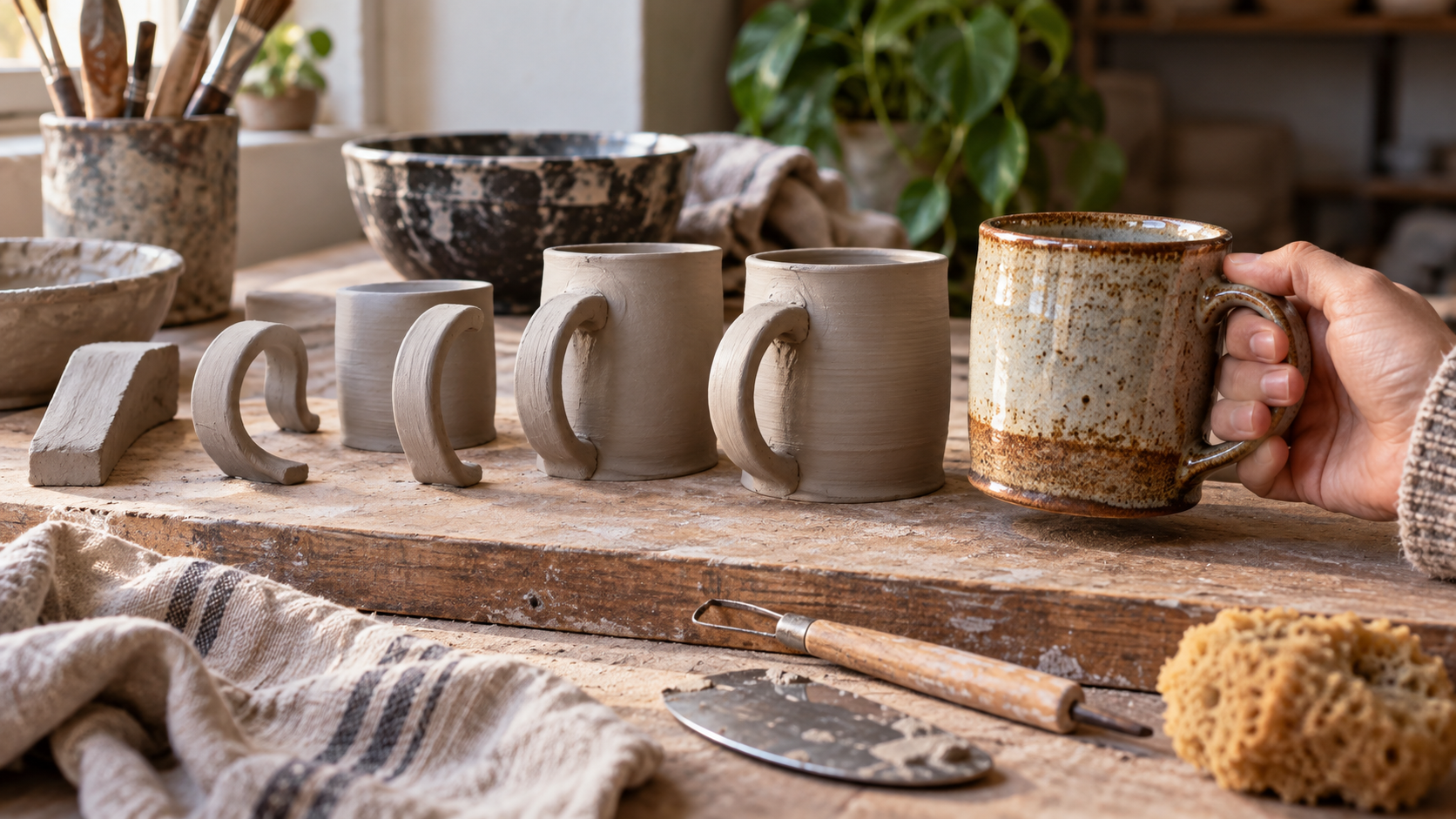
The mug looked excellent on a shelf. The glaze had broken pleasantly along the edge, the body had a gentle taper and the handle completed the silhouette. I made tea, picked it up and discovered
Six bowls came out of the same batch with six slightly different faces. One glaze looked deeper near the foot. Another rim carried a little more movement. A third bowl was the one I kept