
What a corpus can reveal about an ordinary phrase
A corpus can show where a phrase appears, which meaning its context supports, and how its use varies across sampled kinds of speech and writing. Its counts inherit the limits of the collection.
A little inspiration. A new way of seeing.
Discover thoughtful stories from people
with something to say.
For the endlessly curious.
Read widely, at your own pace.
9 stories found Clear filters ↗
A corpus can show where a phrase appears, which meaning its context supports, and how its use varies across sampled kinds of speech and writing. Its counts inherit the limits of the collection.

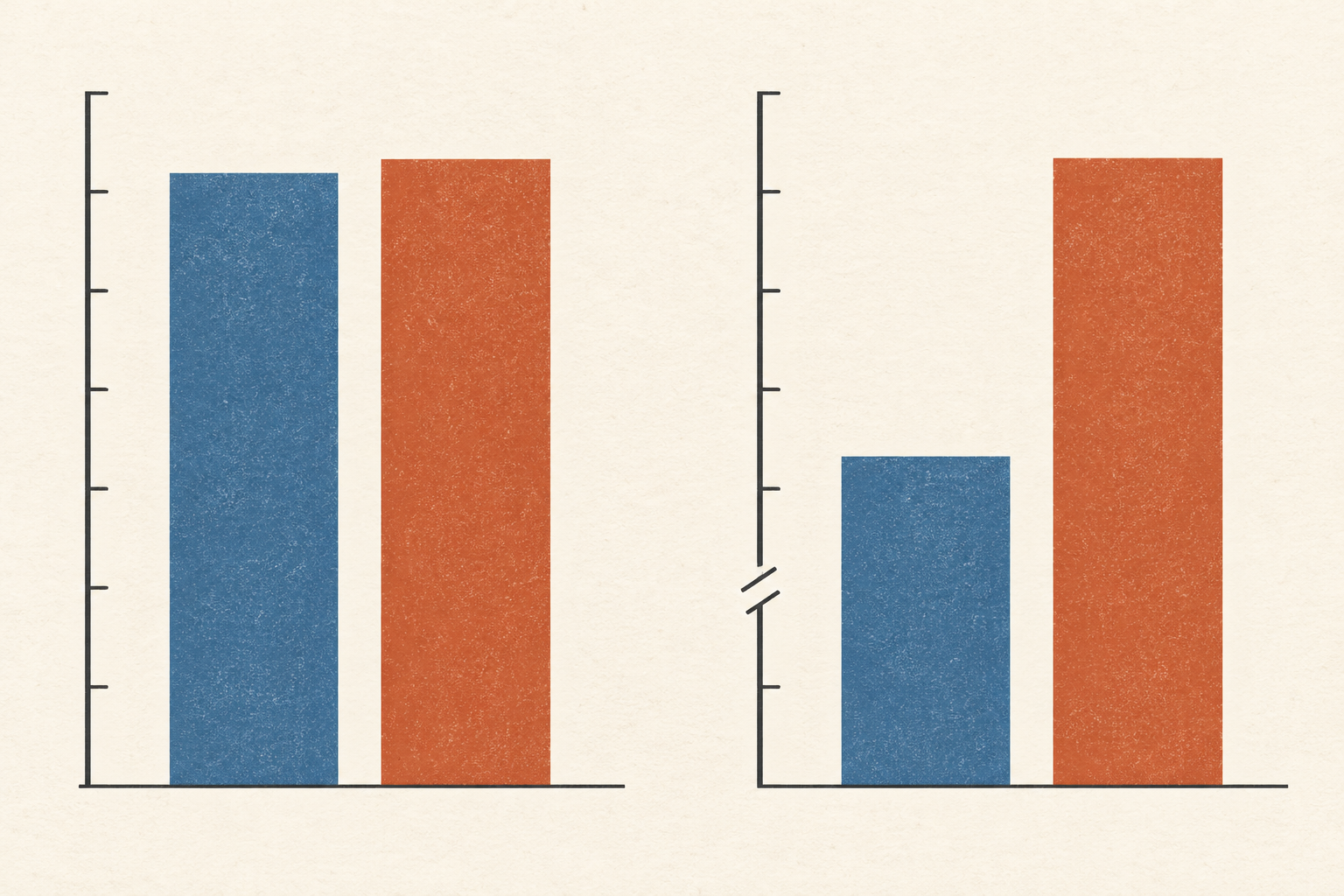
A cropped axis can turn a small gap between values into a towering gap between bars. The right way to read it depends on the mark, the scale, and the comparison being asked of the reader.
A rising benchmark can signal real progress, narrower preparation, or a changed comparison. Evidence from school testing and image classification shows how to tell those stories apart.
Matching binaries are powerful evidence about a build. Understanding the claim means separating repeatability, provenance, and the quality of the source.
A response rate counts missing voices, but bias depends on what those voices would have said. Real survey comparisons show why the same respondents can support one estimate better than another.
A purity percentage answers a defined analytical question. Identity, amount, sterility, endotoxins, clinical benefit and regulatory approval each require their own evidence.
The familiar 95% label belongs to a sampling and calculation method. A small clean sample shows how one formula can erase uncertainty, while another keeps the limit visible.
A percentage can be accurate and still leave its central question unanswered. Trial results, road fatalities and graduate admissions show how the population, exposure and time beneath a number change what it means.
Peptide describes molecular construction. Sequence, targets, formulation and human evidence determine what a particular peptide can actually claim to do.